Catch a Brainrot Gameplay Basics - Catching, Rarity, Boxes and Zones
Catch a Brainrot is built around a five-step loop: explore an area, encounter a wild brainrot, weaken it, catch it with a box, and either add it to your Brain Index or sell it for coins. The shop tiers, zone gates, Trainer battles, eggs and PvP are all built on top of that loop.
The catch loop
Weaken a wild brainrot first, then throw a catching box at it - the lower its HP when the box lands, the higher the capture chance.
Killing instead of catching costs roughly 5x the coins on sell. Boxes also have a level cap - if the wild brainrot is above your box's cap, the capture fails even at 1 HP.
Rarity tiers and the glow tells
Four rarities: Common (no glow), Uncommon (green glow), Rare (blue glow) and Epic (highest overworld tier in Area 1). The bottom-left HUD shows spawn odds for your current zone - Epic sits around 0.008-0.31% in Zone 1.
Higher-rarity brainrots also spawn at higher levels, and level stacks its own coin bonus on top of the rarity multiplier - an Epic sells for well over 2x a same-level Uncommon. Rare and Epic spawns also carry distinct audio cues, useful for spotting a glow through foliage.
The three main catching boxes
The Rot Center's shop sells three catching boxes:
- Rot Box - 15 Robux / 31 coins - no level requirement - catches up to level 9
- Silver Box - 45 Robux / 197 coins - level 2 required - catches up to level 15
- Gold Box - 90 Robux / 701 coins - level 6 required - catches up to level 22
- Snow Box, Snowman Box, Miner Box, Frozen Box - the Ice Zone's box tier, unlocked in Area 2 Zone 1; see the Box Tier List guide for pricing
Areas, zones and the key-gate system
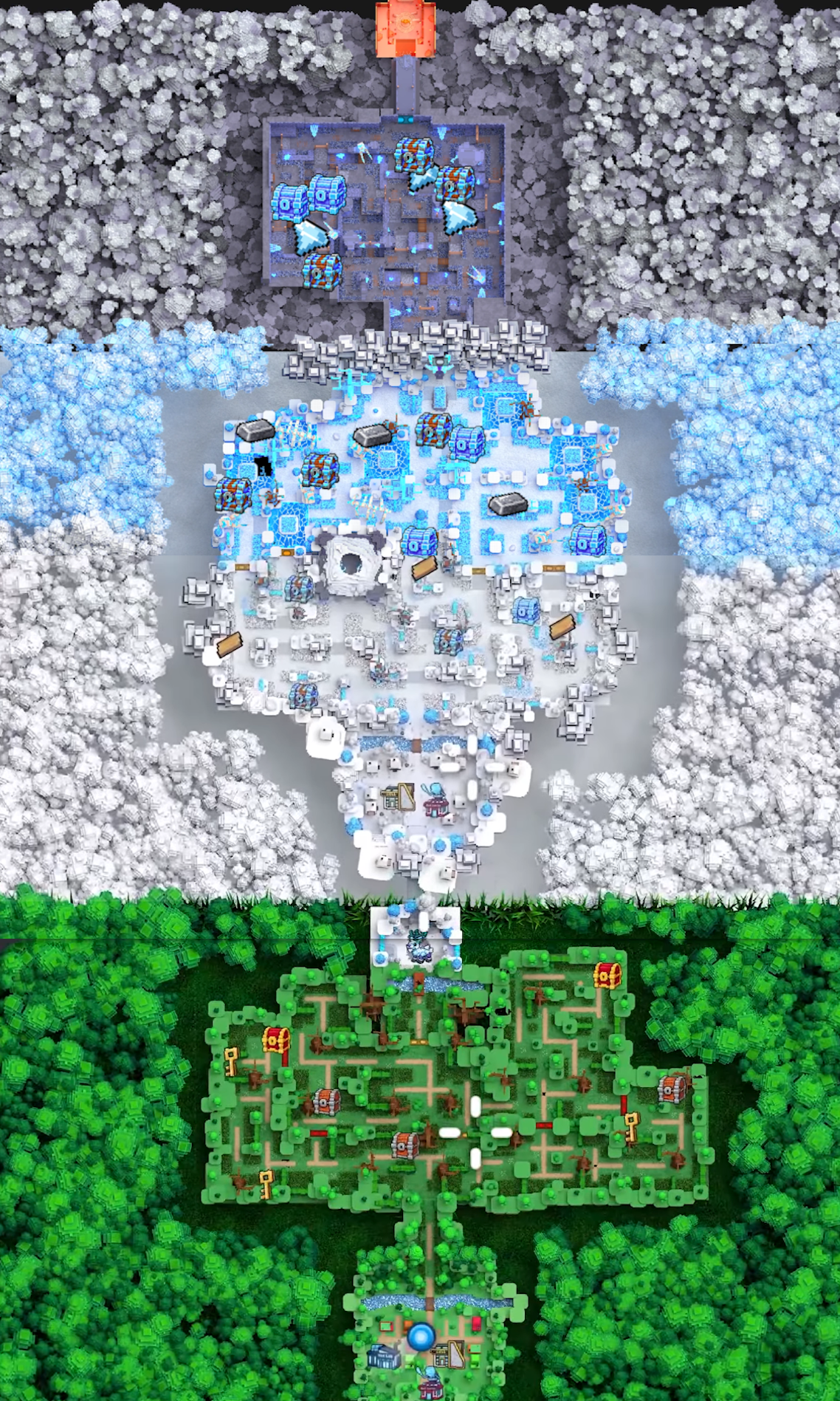
The world has two numbered Areas: Area 1 and Area 2, the Winter Arena. Area 2 has three wild zones: Zone 1, Zone 2, and Zone 3 - Quarry.
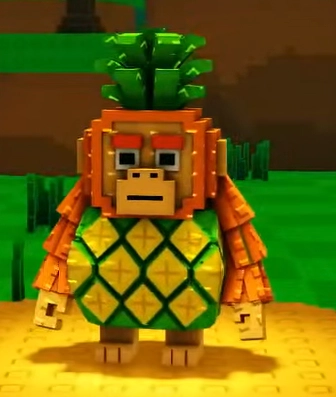
Progression runs from Area 1 into Winter Arena Zone 1. Upgrade the Pickaxe with Cocofanto Elephanto, Trulimero Trulicina, and 30,000 Frostcoins to enter Zone 2, then continue to the Quarry.
Three keys are scattered around sub-zone 1a (near the golden chest, bottom-left of the map, and near the first chest). Three Trainer NPCs then gate the boundary, costing roughly 970, 1.1k and 1.3k coins (about 2.5k total). Clearing them opens sub-zone 1b, where wild brainrots start around level 18.
The Winter Arena Pickaxe upgrade
Winter Arena Zone 2 requires an upgraded Pickaxe. The upgrade costs Cocofanto Elephanto, Trulimero Trulicina, and 30,000 Frostcoins.
Zone 3 - Quarry is the last wild zone. The final chamber beyond it requires 3 Diamonds from Zone 3 trainers, Pipi Potato, Burbaloni Luliloli, and 40,000 Frostcoins.
Movesets roll per copy
Ability slots roll per copy - two catches of the same species won't always share a moveset. One Ecco Cavallo Virtuoso might roll Feathers / Heal / Horse Attack, another Feathers / Fry / Fire Blast. Applies to wild catches and egg hatches alike.
Charge is always the free first slot on every species. The other three slots draw from a shared pool per species - cycle catches if you want a specific combination.
Elements and type advantages
Wild brainrots carry an element type inferred from their moves. Two elements exist so far: Normal in Area 1, Ice in Area 2 (the Winter Arena). Move names like Fire Blast, Whirlpool, Splash, Bite and Sword hint at a fuller type roster to come.
Type advantages are not applied to damage yet - no super-effective or resistance multipliers are live. Build teams around raw level and rarity for now.
Eggs and the Mystery Wheel
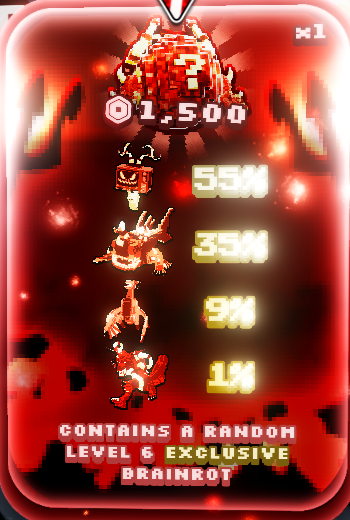
Three eggs at launch: Rare Egg, Epic Egg and Demon Egg. Purchased with Robux, unlocked after the tutorial around account level 3-5. The Demon Egg pool holds the Demon-only creatures: Demonic Fox Spirit, Dragono Demonico and Demonicedon.
Standard eggs aren't coin-efficient since the same brainrots can be caught free-to-play. The exception is the top-tier pull, a Legendary/Mystic-style rarity at roughly a 5% rate.
At the Cave (Area 2 Zone 1), placing three brainrots on the Altars spins the Mystery Wheel (Wheel of Fortune). Rewards: the Mythic Egg, Shards, a snowman-themed brainrot, a Hoverboard, a Crystal Box and the Snow Egg. UFO is a direct shop purchase, not a wheel drop.
Winter Arena economy: Frostcoins, Shards and the shop
Area 2 runs its own two-currency economy on top of Area 1's coins. Frostcoins are the standard currency, earned from wild-brainrot kills and quests inside Area 2. Shards are the premium currency (blue crystal icon), earned mainly from the Wheel of Fortune, or bought with Frostcoins in six bulk tiers from 90 Shards/79 Frostcoins up to 11,000 Shards/4,999 Frostcoins.
The shop sells: Crystal Box (15 Shards, random loot), Candy Cane (140 Shards, +625 EXP to a chosen brainrot), Hoverboard (86 Shards, Speed 35), Haker (180 Shards, green hoverboard variant), Magic Carpet (690 Frostcoins, Speed 75) and UFO (1780 Frostcoins, Speed 99 - the fastest board in the game).
Currencies
Five currencies at launch - three usable anywhere, two scoped to the Winter Arena:
- Coins - primary Area 1 currency; earned by selling brainrots at the Sell building (5x more if captured rather than killed); spent on catching boxes and Trainer buy-ins
- Robux - Roblox's platform currency; direct purchase of catching boxes, eggs and cosmetics
- Frostcoins - the Winter Arena's standard currency, earned from wild-brainrot kills and quests inside Area 2; spent on Winter Arena shop items and bulk Shard packages
- Shards - the Winter Arena's premium currency (blue crystal icon), earned mainly from the Wheel of Fortune at the Cave; used to buy crates, hoverboards and other Winter Arena shop items
PvP and trading - status update
PvP is a core mode using the same catchable brainrots from story mode, intended as one of the primary end-game activities alongside collecting and trading.
Clicking another player on the map opens a three-button interaction menu (PvP / Trade / Exit). As of 2026-07-12, PvP is active and clickable in live gameplay.
Trading is the exception: the Trade button is visible but the trade action does not currently complete. See our PvP and Trading guide for the full breakdown, including the 6-slot brainrot inventory shown for each player.
Full PvP mechanics (modes, matchmaking, ranked structure, rewards) aren't published yet. Type advantages aren't live, so the meta will shift once they are.
Events
Events exist as a mechanic, but frequency, triggers and rewards aren't published yet.
The four main hubs
Non-combat locations you will return to constantly:
- Rot Lab - starter delivery; also the source of the current-decorative "illegal box"
- Rot Center - free party heal, catching-box shop, brainrot storage (map-warpable)
- Sell - the building where you convert brainrots to coins
- Home - the player's home-base area
- Cave - Altars for the Mystery Wheel / Wheel of Fortune (Area 2 Zone 1); the source of Shards, the Mythic Egg and hoverboards
- EXP Machine - where Rot Candy is purchased and fed to a chosen brainrot to boost its XP
Gallery
Click any image to enlarge.
FAQ
How does catching actually work in Catch a Brainrot?
Damage a wild brainrot down to low HP, then throw a catching box (Rot Box, Silver Box or Gold Box) at it - lower HP means a higher capture chance. If the brainrot is above your box's level cap (9 for Rot, 15 for Silver, 22 for Gold), the capture fails regardless of HP.
What are the rarity tiers?
Four: Common (no glow), Uncommon (green glow), Rare (blue glow) and Epic (highest overworld tier so far). Spawn odds show in the bottom-left HUD for your current zone.
When does PvP unlock?
PvP is live as of the days following launch. Clicking another player opens a three-button menu (PvP / Trade / Exit) with PvP active and clickable.
Is trading live in Catch a Brainrot?
Not yet. The Trade button is visible in the player-interaction menu, but the trade action doesn't complete.
Do type advantages matter yet?
Not at launch - no super-effective or resistance multipliers are live. Elements exist as a flavor tag (Normal in Area 1, Ice from Area 2) but don't change damage yet.
How do I get Shards in Catch a Brainrot?
Go to the Cave in Area 2 Zone 1, place three brainrots on the Altars, and spin the Mystery Wheel. Rewards include Shards, the Mythic Egg, a snowman-themed brainrot, a Hoverboard, a Crystal Box and the Snow Egg.
What does the Pickaxe upgrade do?
It opens Winter Arena Zone 2. Upgrade it with Cocofanto Elephanto, Trulimero Trulicina, and 30,000 Frostcoins.
Which brainrots come from the Demon Egg?
Demonic Fox Spirit, Dragono Demonico and Demonicedon.
Source-checked
This guide is written and source-checked by GuideDex staff against in-game testing and primary sources. updated · GuideDex staff. Report a correction.